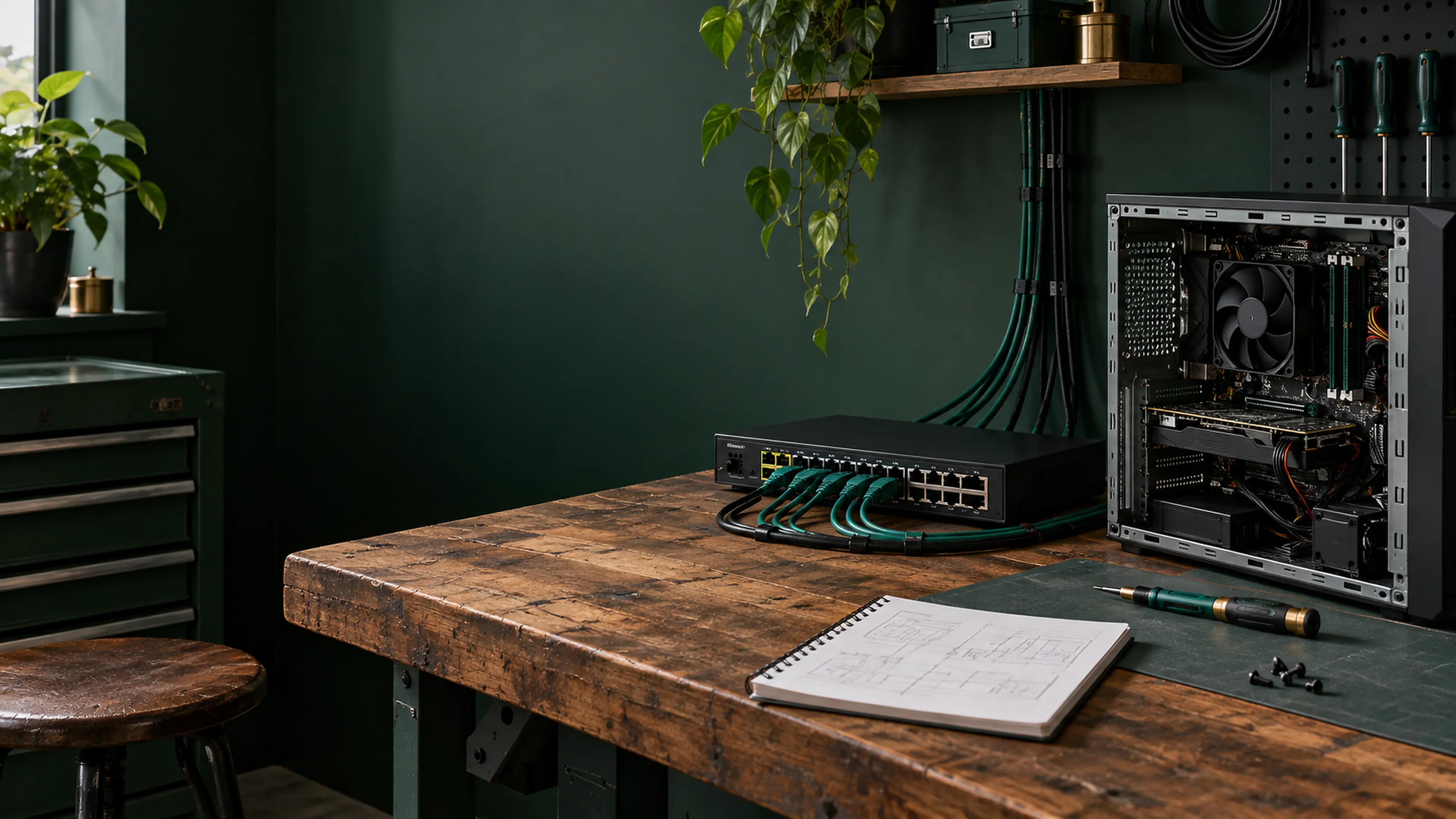
Work I can take from problem to implementation.
I am most useful when the request is concrete: a workflow routes incorrectly, an import is not creating the intended relationships, a web system needs custom behavior, a workstation needs to be built or stabilized, or two systems need to exchange data reliably.
NetSuite development & troubleshooting
Custom behavior when native NetSuite is not enough, plus careful investigation when existing customization is behaving badly.
I work across SuiteScript 2.1, SuiteFlow, custom records, forms, Suitelets, saved searches, SuiteQL, permissions, and transaction-level logic. I also spend a lot of time reading and tracing what already exists before adding anything new.
Development
- User Event, Client, Suitelet, Scheduled, and supporting library scripts
- Custom-record configuration for business values that change over time
- Transaction validation, defaults, buttons, field behavior, and role-aware UI logic
- SuiteQL and saved-search-backed investigation or reporting
Troubleshooting
- Trace workflow, script, sourcing, and form interactions
- Investigate permission, subsidiary, status, or field-source conflicts
- Handle missing/inactive configuration safely instead of assuming it always exists
- Review existing code before replacing it with another customization
Approval systems & SuiteFlow
Approval routing designed around the business without turning changing organizational rules into hard-coded source.
I work on vendor-bill and purchasing approval designs where a single supervisor chain is not enough. The exact client hierarchies stay private; the reusable engineering problem is deciding which rules belong in maintainable configuration and which rules genuinely need workflow or code.
What I design
- Tiered approval behavior and controlled exception paths
- Organization/location-aware routing patterns
- Business-owned mappings and thresholds outside deployed code
- Fallbacks that fail predictably when configuration is missing
What I test
- Where the routing driver really comes from
- How workflow state and script logic interact
- Duplicate approvers and boundary conditions
- What an administrator can safely change without development
Data migration, CSV imports & reconciliation
Not just getting a CSV through the Import Assistant—making sure the resulting records, references, and relationships are correct afterward.
Imports become difficult when references differ between environments, duplicates already exist, child records point to missing parents, or a technically successful import leaves the underlying data model wrong.
Typical work
- Customer, contact, vendor, custom-record, and relationship imports
- Destination-environment reference mapping when names are unreliable
- Sandbox-to-Production reconciliation
- Duplicate analysis and staged dependency order
Validation
- Compare import results against exported destination records
- Confirm relationships after the import, not just row success
- Separate true failures from records that need data cleanup first
- Respect form, status, subsidiary, and reference-key constraints
Integrations, SFTP & transaction output
Getting reliable data and documents out of NetSuite for the people and systems that actually need them.
This includes REST/SOAP/SuiteTalk work, secure file movement, structured payment/output formats, and Advanced PDF/HTML / FreeMarker documents. The downstream requirement drives the design.
Connected systems
- REST, SOAP, SuiteTalk, and external service integration work
- SFTP-based inbound/outbound processes and environment setup
- Structured payment and operational file requirements
- Validation and safe handling of missing/invalid output data
Documents
- Advanced PDF/HTML and FreeMarker templates
- Conditional sections and transaction/line-level data
- Commercial, shipping, and customer-facing documents
- Layouts that prioritize the actual operational handoff
PC systems, hardware & technical support
Hands-on technical work for people and small teams that need a reliable workstation, a sensible upgrade path, or a problem diagnosed without guesswork.
I have long treated PC configuration and system building as the same kind of engineering problem I apply elsewhere: understand the workload first, choose compatible components, build cleanly, validate stability, and document what changed.
Builds & upgrades
- Component selection based on workload, budget, compatibility, thermals, and future upgrades
- Custom desktop assembly, storage/RAM/GPU upgrades, cable management, and cooling
- BIOS/UEFI, firmware, drivers, Windows installation, and post-build configuration
- Data migration and practical setup when replacing or rebuilding a workstation
Troubleshooting
- Boot, stability, thermal, storage, memory, driver, and peripheral problems
- Separate software symptoms from hardware faults before replacing parts
- Performance cleanup and configuration for the actual day-to-day workload
- Clear recommendations when repair, upgrade, or replacement is the better choice
Web systems & internal tools
Custom web development where permissions, user state, security, administration, and maintainability matter as much as the front-end.
I am not trying to compete with drag-and-drop brochure-site builders. The web work I enjoy is closer to systems engineering: custom WordPress plugins, account experiences, access controls, workflow tools, connected sites, and operational administration.
Development
- Custom WordPress plugin and account functionality
- Role-aware UI and server-side access control
- Registration, profile, session, and security workflows
- Administration, diagnostics, and maintainable settings
Systems thinking
- Reduce plugin overlap instead of stacking more plugins
- Keep authorization on the server, not just in UI behavior
- Design for future maintenance and support
- Balance UX improvements with security boundaries
You only need to describe the behavior you are trying to change.
I can help separate the business requirement from the technical layer. The first conversation does not need a pre-selected script type or a perfectly written scope.